
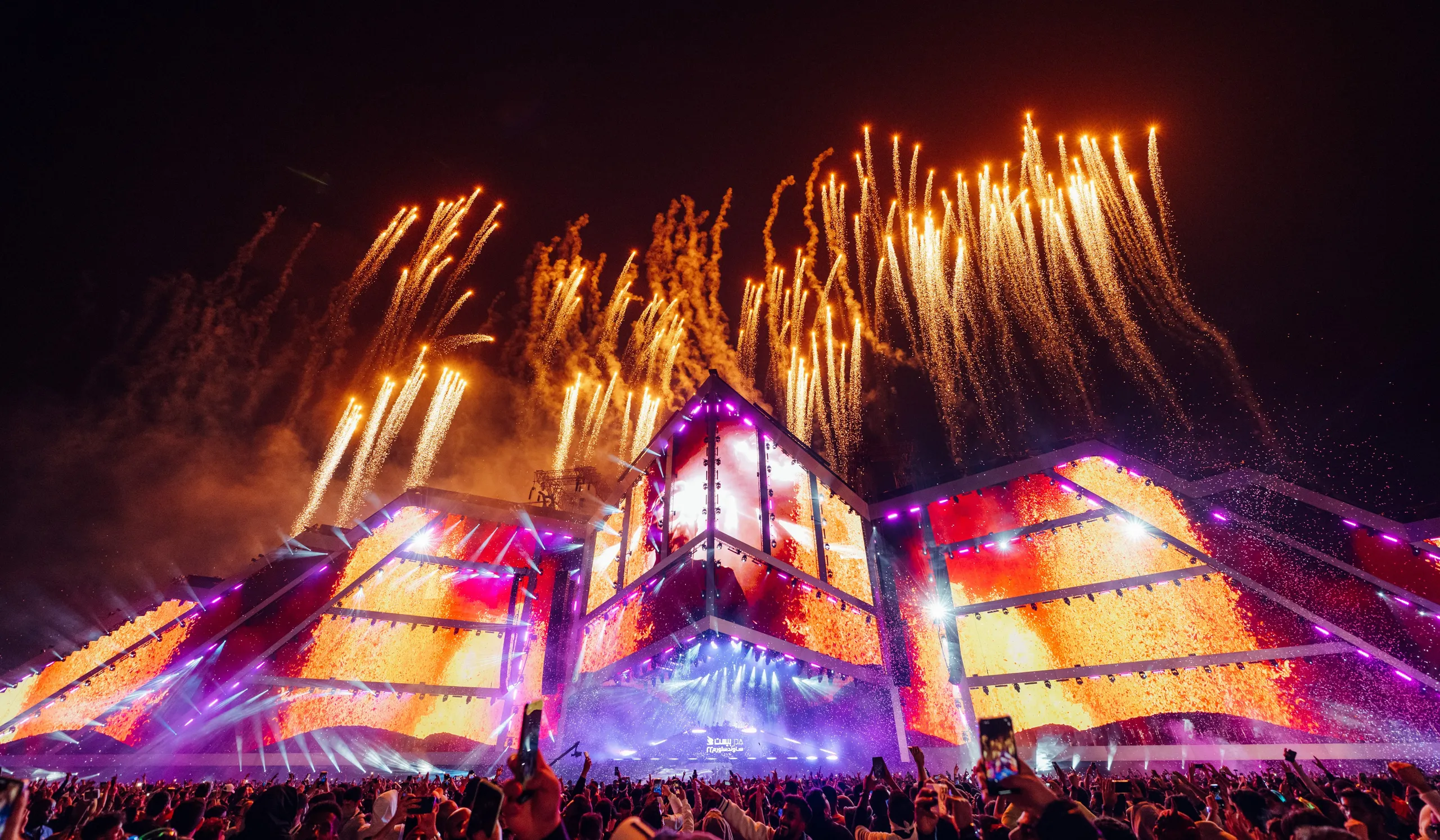
For decades, large-scale events have relied on diesel generators because they are familiar and trusted. And when considering a transition, change must be approached carefully, with detailed planning, measurement, and collaboration.
But there is also a very real perception challenge. Production teams have only experienced years of increasing costs across every area of delivery, and therefore struggle to believe that meaningful cost savings are still available.
Soundstorm has been on that journey. Their transition from primarily diesel-powered in 2019 to 90% grid power in just six years is the result of ambition, long-term commitment and close cooperation between all stakeholders.
Some of the results from the 2025 edition of Soundstorm included:
✅ 80%‼️ reduction in the number of running generators compared to 2024
✅ 61%‼️ reduction overall in installed generator capacity kVA (including standby sets that didn’t run)
✅ 38%‼️ reduction in installed generator capacity kVA for stage tech
✅ 70%‼️ reduction in fuel use per day compared to 2024 (expected)
✅ Ensuring that over 90% of the back of house & infrastructure power ran entirely from the grid
✅ Comprehensive energy monitoring and analysis, producing verified data to inform decision making for future editions (no pre-conceptions or assumptions, just facts)
✅ Verified data proves that it is possible to run the festival entirely on the grid in 2026, with 100% reduction in fuel consumption and full redundancy
For more information and the full TPiMEA article, click the link below